
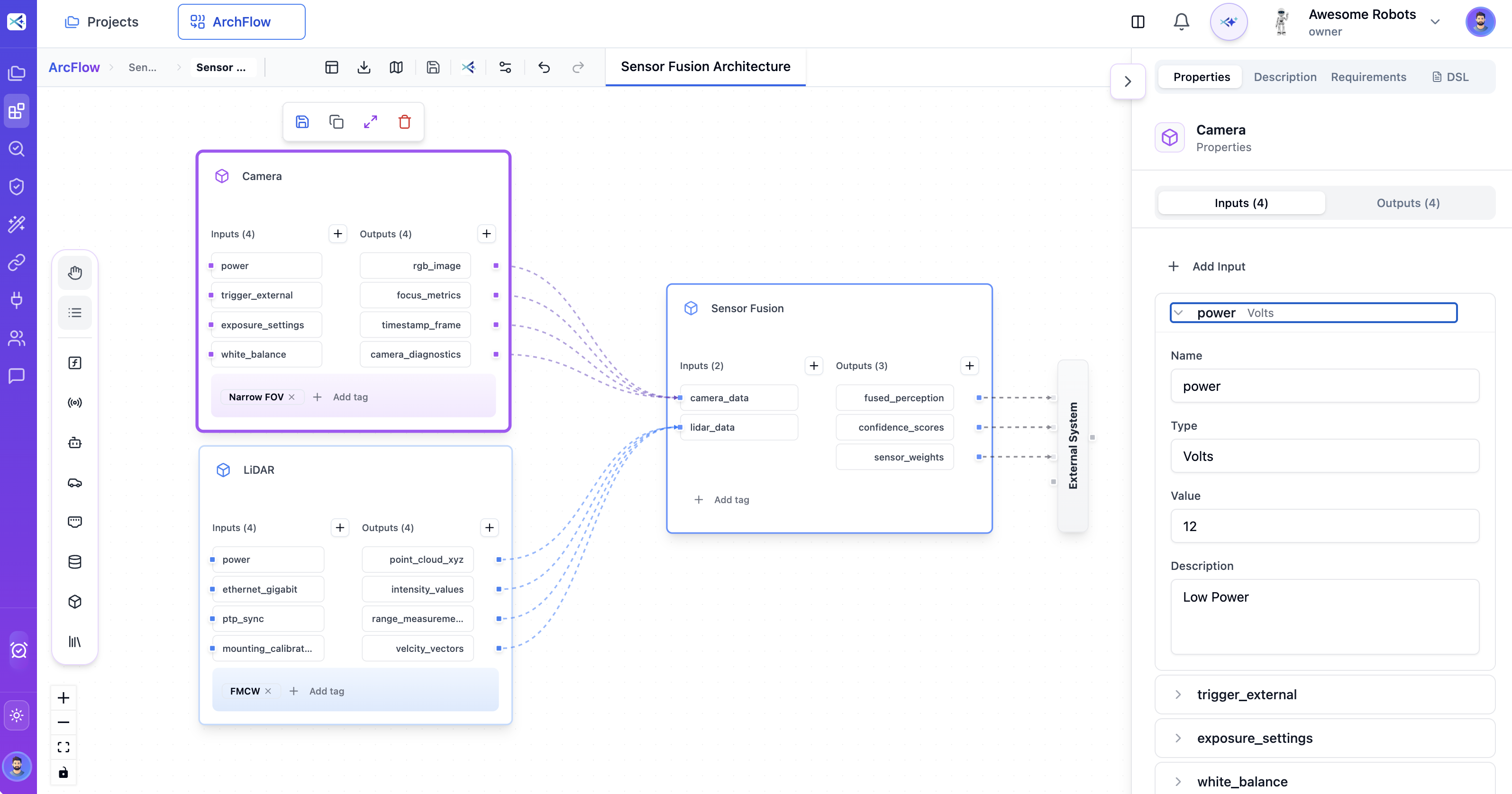
Comprehensive system architecture modeling from concept to component level
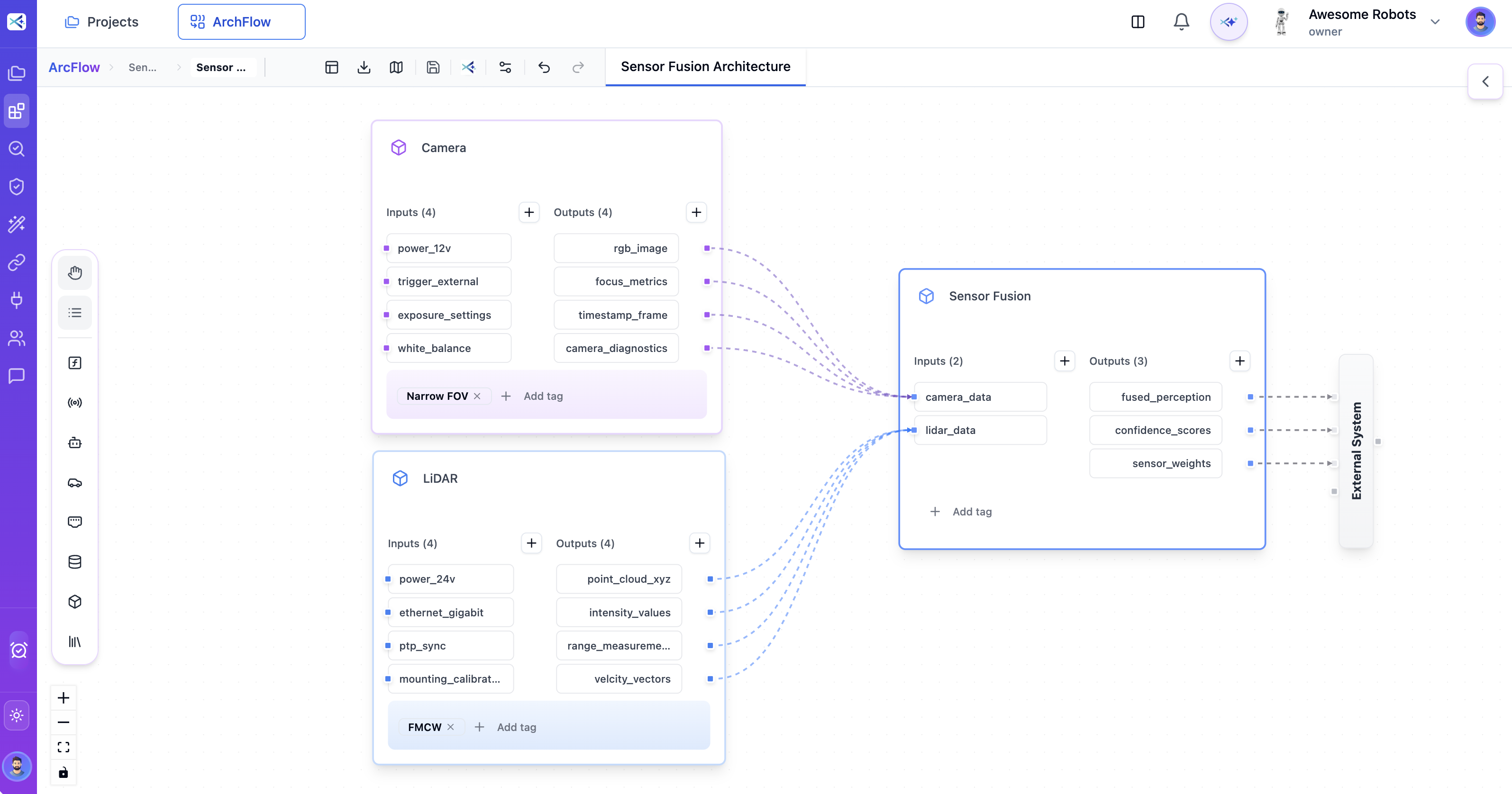
Build multi-level system architectures from system-of-systems down to individual components with intuitive nested decomposition. Model complex systems with clear parent-child relationships and seamless navigation between abstraction levels.
Create comprehensive functional block diagrams showing data flows, control signals, and interfaces between components. Visualize system functionality with drag-and-drop simplicity while maintaining engineering rigor and completeness.
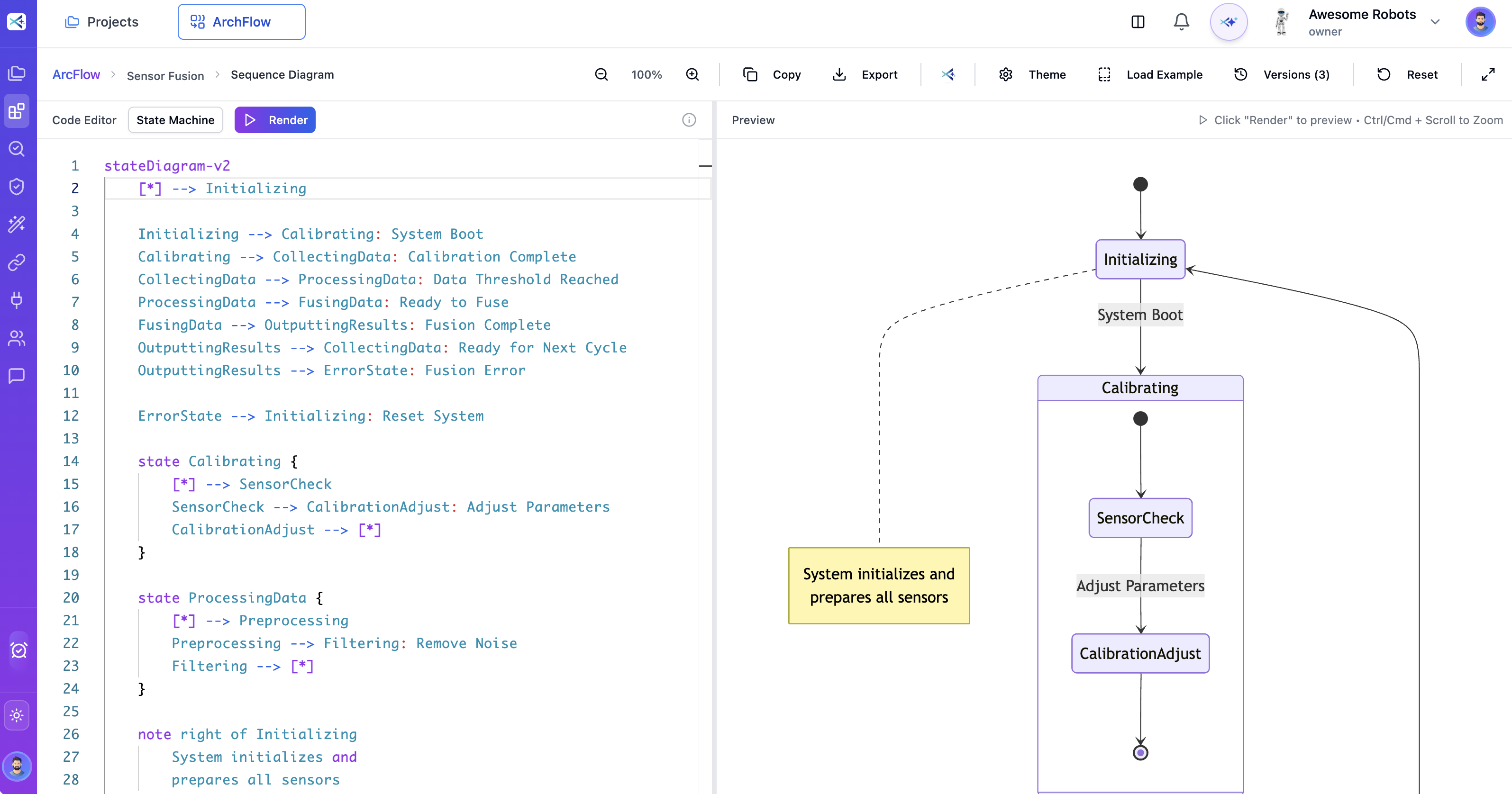
Define precise system behavior with state machines including transitions, guards, actions, and event triggers. Model complex operational modes and failure states with visual clarity that bridges design and implementation teams.
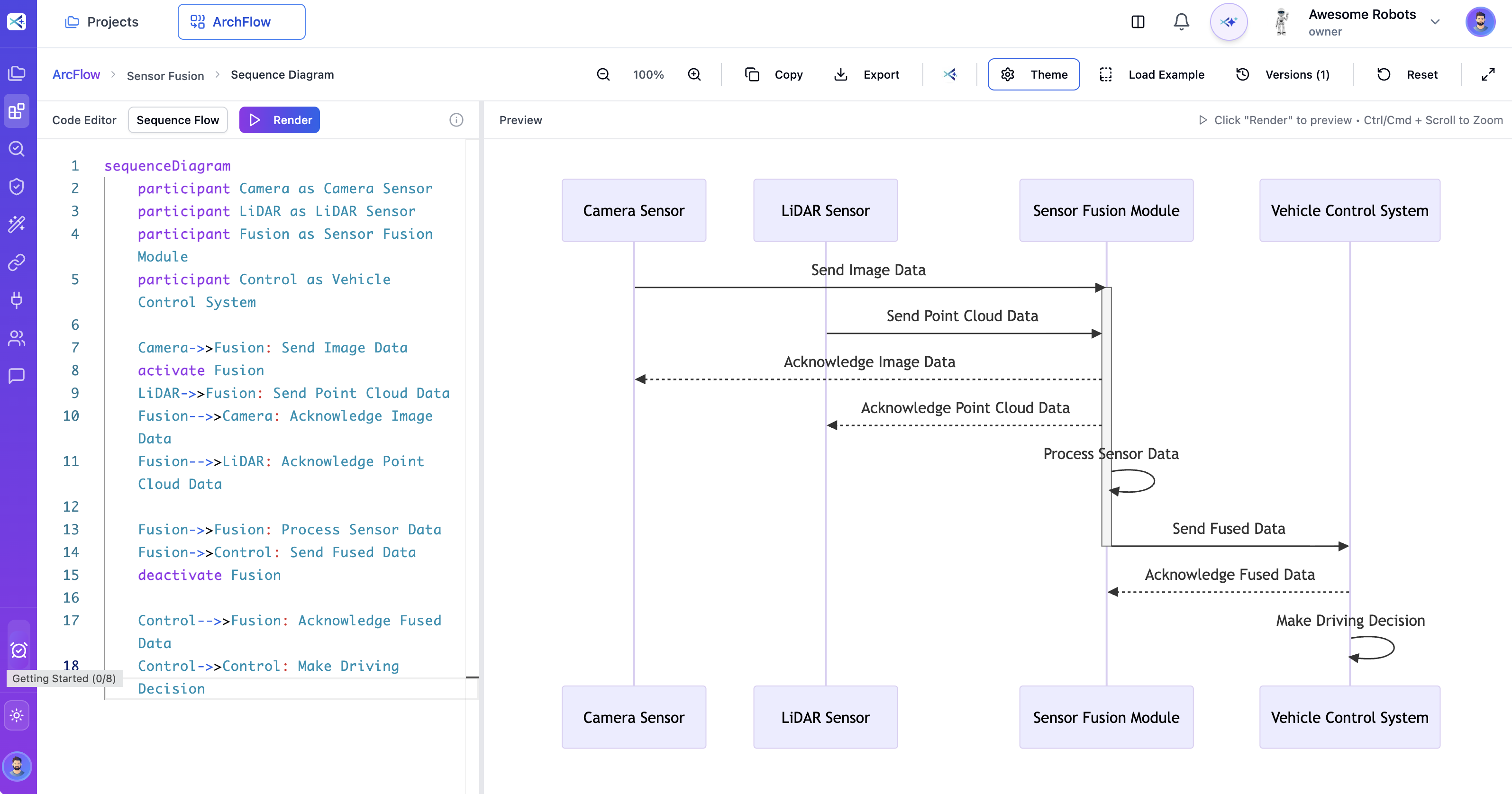
Visualize interactions between components over time with sequence diagrams for use cases and operational scenarios. Capture temporal dependencies and communication patterns essential for distributed system design and integration testing.
Trace requirements directly to architectural elements ensuring every requirement is allocated and every design decision is justified. Maintain bidirectional links for complete impact analysis and compliance documentation.
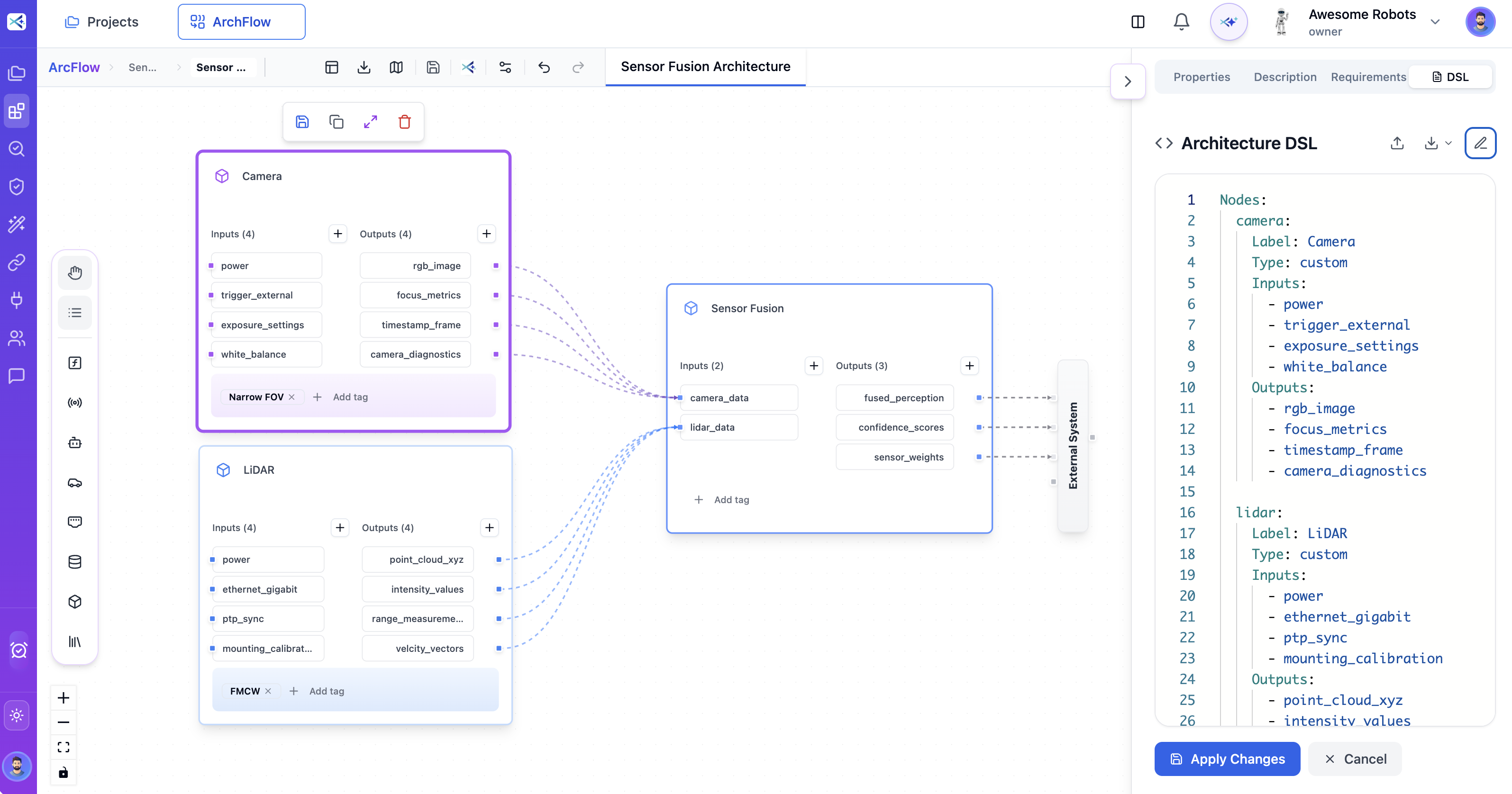
Export your architecture in machine-readable formats (JSON, YAML, XML) enabling automation, simulation, and integration with development tools. Bridge the gap between architecture and implementation with standardized data exchange.
Create reusable component libraries with predefined interfaces, behaviors, and properties for faster architecture development. Build once, reuse everywhere with version-controlled templates and organizational best practices.
Support for industry standards including SysML, AADL, and UML for seamless integration with existing toolchains. Eliminate vendor lock-in while maintaining compatibility with legacy architecture artifacts.
Enable distributed teams with multi-user collaboration, role-based access, version control, and change tracking. Maintain architectural integrity while allowing parallel development across subsystems and organizational boundaries.
Ensure architectural integrity with automated consistency checking, interface validation, and completeness analysis. Catch design errors early with intelligent rules that enforce best practices and standards compliance.